
Mexican Food Is More Than Tacos: The Flavors, Memories, and Traditions Behind Mexico’s Cuisine
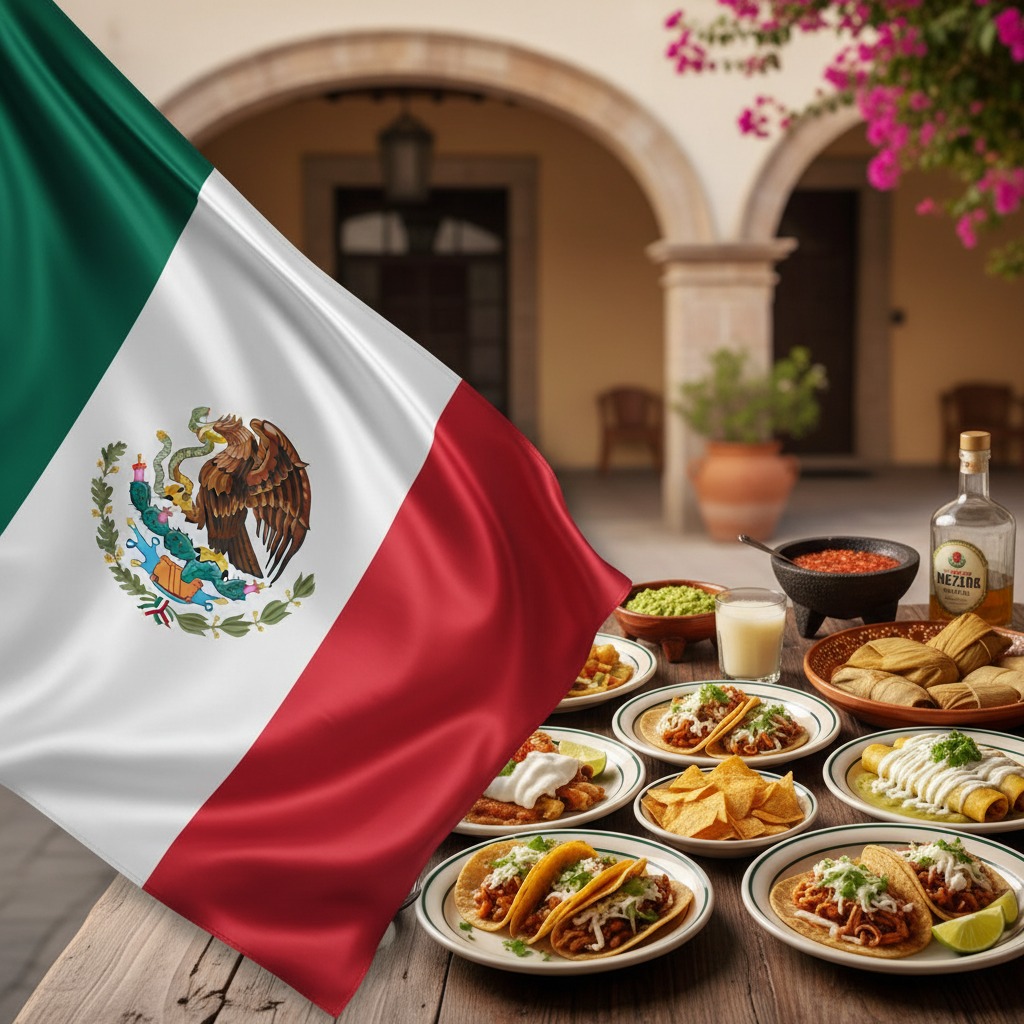
When people around the world hear the words Mexican food, the first things that may come to mind are tacos, guacamole, salsa, burritos, and perhaps a plate of nachos.
But ask a Mexican person what Mexican food really means, and the answer is usually much deeper.
Because Mexican cuisine is not simply a collection of recipes.
It is the smell coming from the kitchen when someone is preparing breakfast early in the morning. It is the sound of tortillas being made by hand. It is a family gathering around the table. It is the recipe that a grandmother never wrote down because she simply knew how to make it. It is the salsa whose exact ingredients nobody can quite agree on. It is the regional dish that someone misses when they move far away from home.
Mexican food is memory.
And perhaps that is what makes it so special.
A Cuisine Built on Ancient Foundations
One of the most fascinating things about Mexican cuisine is how much of it is connected to traditions that go back centuries.
Corn, beans, and chili peppers form one of the fundamental foundations of traditional Mexican food. These ingredients are simple, but the possibilities created from them are almost endless.
Corn can become tortillas, tamales, tlacoyos, sopes, tostadas, and countless other foods.
Beans can be prepared in different ways depending on the region, the family, and even the occasion.
And chili peppers are not simply about making food “spicy.” Different chiles bring different aromas, flavors, colors, and levels of heat. They can transform the character of an entire dish.
Traditional Mexican cuisine also uses techniques that have been passed down through generations. One important example is nixtamalization, a process used to prepare maize before it becomes masa. This technique is an important part of the traditional food system and is specifically recognized in UNESCO’s description of Mexican cuisine.
That is why reducing Mexican food to “tacos and spicy sauces” misses the bigger picture.
There is an entire culinary world behind those foods.
Every Region Has Its Own Mexico
Perhaps one of the biggest mistakes someone can make when talking about Mexican food is treating Mexico as if it had one single cuisine.
Mexico is enormous, and its regions have their own ingredients, cooking traditions, techniques, and favorite dishes.
The food you find in Oaxaca can tell a very different story from the food you find in Yucatán.
The flavors of Puebla are not identical to those of Jalisco.
Northern Mexican cuisine has its own character, while the cuisines of the Pacific coast, the Gulf coast, central Mexico, and the Yucatán Peninsula have developed in their own environments.
Geography matters.
Climate matters.
Local agriculture matters.
History matters.
And family traditions matter.
This regional diversity is one of the reasons Mexican cuisine is so difficult to summarize in a single list of “the best Mexican foods.”
There is no single Mexican kitchen.
There are thousands of Mexican kitchens.
And each one has a story.
The Taco Is Only the Beginning
Let’s talk about tacos.
Yes, tacos deserve their place among the world’s great foods.
But even the word “taco” hides an enormous amount of variety.
A taco can be completely different depending on where you are, what meat or filling is used, how the tortilla is prepared, what salsa accompanies it, and what toppings are added.
Al pastor.
Carnitas.
Barbacoa.
Carne asada.
Birria.
Fish tacos.
Vegetarian tacos.
And countless regional and family variations.
Two people can both say “I love tacos” while imagining completely different meals.
And that’s part of the fun.
The tortilla itself matters. The salsa matters. The cooking method matters. Even the way the taco is assembled can become a subject of passionate debate.
Ask several Mexicans what makes the perfect taco and you might quickly discover that you have started an argument.
A delicious argument, perhaps.
But an argument nonetheless.
Salsa Is Not Just a Side Dish
There is another subject that can reveal just how personal Mexican cuisine can be: salsa.
For some people, salsa is an accompaniment.
For others, it is almost a necessity.
A meal can feel incomplete without it.
And Mexican salsas are incredibly diverse.
Tomatillos, tomatoes, onions, garlic, cilantro, dried chiles, fresh chiles, roasted ingredients, toasted spices and many other ingredients can be combined in different ways.
Some salsas are fresh and bright.
Others are smoky.
Some are acidic.
Some are rich and deep.
Some are intensely hot.
And some are surprisingly mild.
Then there is the eternal question:
Which salsa is the best?
There probably isn’t an answer.
And maybe there shouldn’t be one.
Food becomes interesting precisely because people have different tastes, memories, and traditions.
Mole: When a Sauce Becomes a Culinary Story
If tacos represent one of the most recognizable faces of Mexican food, mole represents another side of Mexican culinary complexity.
Mole is not simply “a sauce.”
Different moles can involve combinations of chiles, spices, nuts, seeds, fruits, chocolate, herbs, and other ingredients.
The result can be complex, aromatic, earthy, sweet, bitter, smoky, spicy, or a combination of several of these sensations.
And mole is another reminder that Mexican cuisine cannot be judged only by how simple or complicated a recipe looks.
Sometimes the most memorable food comes from a process that takes patience.
Tamales and the Meaning of Sharing Food
Tamales are another food that demonstrates the social side of Mexican cooking.
Preparing tamales can be more than simply following a recipe. It can become a family activity, with different people helping prepare ingredients, assemble the tamales, cook them, and eventually sit down together to eat.
This is an important characteristic of traditional Mexican cuisine.
Food is not always an individual experience.
It can be a social ritual.
A celebration.
A family tradition.
A way of keeping memories alive.
UNESCO describes traditional Mexican cuisine as a cultural model involving agriculture, culinary techniques, rituals, community customs, and the entire food chain from growing ingredients to preparing and eating food. Mexican cuisine was inscribed on UNESCO’s Representative List of the Intangible Cultural Heritage of Humanity in 2010.
Mexican Breakfast Deserves More Attention
There is also something wonderful about Mexican breakfast.
A Mexican breakfast can be hearty, colorful, comforting, and completely different from what someone might expect from a typical breakfast.
Eggs, beans, tortillas, chilaquiles, huevos rancheros, tamales, fresh fruit, salsa, avocado, and many regional specialties can appear on the table.
And breakfast is another place where family habits become important.
One household may have a particular way of preparing eggs.
Another may insist that the salsa must be homemade.
Someone else may say that breakfast without beans is simply not breakfast.
These little preferences are what make food personal.
The Ingredients Tell the Story
Mexican cuisine is also fascinating because of the ingredients that define it.
Corn.
Beans.
Chiles.
Tomatoes.
Tomatillos.
Avocados.
Squash.
Cacao.
Vanilla.
Herbs and spices.
These ingredients are not random additions to recipes. Many are deeply connected to Mexico’s agricultural history and culinary traditions.
UNESCO specifically highlights corn, beans, and chili as fundamental elements of traditional Mexican cuisine, alongside ingredients such as tomatoes, squash, avocado, cocoa, and vanilla.
And perhaps the most beautiful part is that the same ingredient can taste completely different depending on how it is treated.
Roasted.
Grilled.
Boiled.
Ground.
Fermented.
Toasted.
Cooked slowly.
Combined with other ingredients.
The technique can be just as important as the ingredient itself.
What Makes Mexican Food Taste Like Home?
This may be the most difficult question of all.
Why can a particular dish immediately remind someone of childhood?
Why can the smell of roasted chiles bring back memories?
Why can a simple tortilla, prepared in the right way, feel more satisfying than an expensive meal?
Because food isn’t only chemistry.
It is experience.
It is context.
It is memory.
A dish prepared by a grandmother can mean something completely different from the same dish prepared in a restaurant.
The ingredients may be similar.
The recipe may even be similar.
But the memories surrounding the food are not.
That is why recipes are often passed from one generation to another even when they are never formally written down.
Mexican Cuisine Is Always Evolving
Traditional food does not mean frozen food.
Mexican cuisine continues to evolve.
Mexican cooks experiment with ingredients, techniques, presentation, and new ideas while still maintaining connections to older traditions.
People move from one region to another.
Mexicans living abroad adapt recipes to the ingredients available to them.
Restaurants reinterpret traditional dishes.
Families create their own versions of classic recipes.
And younger generations bring their own ideas into the kitchen.
This doesn’t necessarily destroy tradition.
Sometimes it is exactly how tradition survives.
UNESCO notes that traditional Mexican culinary knowledge continues to be transmitted across generations and that practitioners preserve traditions while also allowing them to remain relevant over time.
The Mexican Kitchen Is Bigger Than Any List
You could spend years exploring Mexican cuisine and still discover dishes you’ve never tasted.
That is part of what makes it so exciting.
There are famous dishes that everyone recognizes.
There are regional specialties that visitors may never encounter.
There are family recipes that exist in only one household.
There are ingredients that are common in one state and unfamiliar in another.
There are dishes associated with celebrations, religious traditions, holidays, markets, street stalls, restaurants, and ordinary family meals.
And perhaps that is the best way to understand Mexican cuisine:
It is not one recipe.
It is a living collection of traditions.
A Final Thought
Mexican food is often introduced to the world through its most famous dishes.
Tacos.
Guacamole.
Salsa.
Tamales.
Mole.
But behind every famous dish is something much more meaningful: people.
Farmers growing ingredients.
Cooks preserving techniques.
Families passing recipes from one generation to another.
Friends sharing food around a table.
Communities maintaining traditions.
And millions of people who can taste something and immediately think:
This reminds me of home.
That is why Mexican cuisine has become famous around the world.
Not simply because it is delicious.
But because it carries identity, history, creativity, family, and memory on every plate.
And once you start looking beyond the familiar tacos and burritos, you discover that Mexican cuisine is not just something to eat.
It is a story that keeps being cooked, shared, and passed on.
Sources & Further Reading
For readers who want to explore the cultural history of Mexican cuisine, UNESCO’s documentation on traditional Mexican cuisine provides an excellent starting point. Mexican cuisine was officially inscribed on the Representative List of the Intangible Cultural Heritage of Humanity in 2010.
Leave a Reply